Dimensions of Military Developments in Yemen
In the Name of Allah, the Most Gracious, the Most Merciful
Answer to a Question
Dimensions of Military Developments in Yemen
(Translated)
Question:
“On Friday, the Chiefs of Staff of the armed forces of Saudi Arabia, Türkiye, and Pakistan met in the Saudi capital, Riyadh, within the framework of the Makkah Joint Defense Agreement, to discuss security developments and threats facing the Kingdom” [Al Jazeera, 26/9/2026]. This meeting remained silent while the Houthis seized control of the entire—or the vast majority of—Yemen’s western coast, without intervention from Saudi Arabia or even America. In fact, Trump stated that the Houthis had promised not to attack American ships in the Red Sea, and therefore America would not intervene! And so it happened; for days, the Houthis have been advancing easily along the western coast. On 11/9/2026, it was announced that the Houthi group had completed its takeover of Bab al-Mandab following an offensive lasting a few days, during which the group managed to seize control of Hays, Al-Khokha, Al-Mukha (Mocha), and its port, extending all the way to Bab al-Mandab and Mayun Island. How did this happen so easily? Why did Saudi Arabia and its tripartite alliance not intervene? And why did America not intervene, despite declaring its opposition to Iran’s proxies—of which the Houthis are a primary one? Indeed, America has announced that it communicated directly with the Houthi group, and the group itself acknowledged this contact on 20/9/2026. What, then, is America’s plan regarding this group linked to Iran?
Answer:
To clarify the situation, let us review the following points:
1- The international conflict in Yemen has been raging since the early 1960s. These forces are represented by Yemen’s former colonialist, Britain, and its new colonialist, America; each has its own regional and local instruments. Britain’s influence over Yemen was established through its agents—foremost among them Ali Saleh (from 1978 to 2011) and subsequently Mansur Hadi. Later, America directed its agent, Saudi Arabia, to intervene in Yemen. This led to the announcement of “Operation Decisive Storm” and the formation of the so-called “Coalition to Support Legitimacy” led by Saudi Arabia in 2015; in reality, however, the operation served to bolster the Houthi group. As we noted in our release dated March 26, 2015, “America supplied the Houthis—via Iran—with various types of weapons and equipment to enable them to dominate Yemen by force, realizing that the political establishment was largely composed of British-aligned figures. Consequently, the Houthis believed they possessed the power to secure dominance over Yemen; they cornered President Hadi to extract concessions through the decrees they compelled him to issue. He would initially agree but then stall on implementation, until they placed him under house arrest. He managed to escape to Aden, but they pursued him there, and he escaped them a second time…”
2- Subsequently, the UAE—a British agent—infiltrated the aforementioned coalition, which Saudi Arabia had established under the pretext of saving Yemen. It succeeded in wresting numerous areas in southern Yemen from Houthi control, thereby reinforcing the influence of Britain and its local agents. It reached Al-Hudaydah—a vital port for the Houthis—and nearly seized control of it, with the aim of advancing toward Sana’a thereafter. However, America mobilized global public opinion against the offensive by citing humanitarian concerns and convened the Sweden meeting. This meeting resulted in a ceasefire in the city of Hodeidah and the withdrawal of UAE forces and the militias led by Tariq Saleh, while control over the city’s security remained in the hands of the Houthis. As we noted in a response to a question issued on December 20, 2018, “Britain knew that Iranian support was the lifeline sustaining the Houthis. Following the closure of Sana’a Airport and the seizure of southern ports, the port of Hodeidah had become virtually the only artery through which Iran could channel support to the Houthis. Consequently, the UAE moved to seize Hodeidah; however, these moves and the battles surrounding the city faced strong American opposition on humanitarian grounds—claiming the port supplied aid to millions of Yemenis. It was as if America cared about humanity—despite having trampled upon it in Syria, alongside its agents, right under the nose of the United Nations through suffocating sieges and barrel bombs. In reality, America sought to manufacture pretexts to keep the port of Hodeidah open for Iranian military support.”
3- In 2022, the formation of a Yemeni Presidential Leadership Council, headed by Rashad al-Alimi, was announced in Saudi Arabia on April 7, 2022, replacing President Hadi, who had transferred his full powers to the council. Prior to this, on April 2, 2022, the warring parties had agreed to a two-month truce in Yemen—renewable—which came into effect on that same day. The United Nations and the United States welcomed the surprise truce and called for its extension. Although most Council members were former British allies, the US—via Saudi Arabia—managed to win over the Council’s head, Al-Alimi, to its side. This was despite his history as a British loyalist who had held high-ranking political positions since the era of former Yemeni President Ali Abdullah Saleh; however, his residence in Saudi Arabia and heavy reliance on Saudi financial and security aid gave the Kingdom significant leverage over him—leverage that had strengthened recently. As for the remaining Council members, most were aligned with the UAE—and thus with the British. Indeed, we noted in a response dated April 20, 2022, “It is observed that all members of the Presidential Leadership Council are backed by the UAE and belong to President Hadi’s own camp; consequently, the influential voice within the Council remains aligned with Britain.” Thus, the truce, this decision, and the formation of the Council were all achieved through a US-British consensus, with the various agents and satellites falling in line with this agreement. In any case, this consensus is not permanent; it holds only until the circumstances that necessitated it change.
4- And that is precisely what happened. In late 2025, forces belonging to the Transitional Council in Yemen—led by UAE-backed Aidarous al-Zubaidi, who is also a member of the Presidential Council—deployed troops to Hadramout and Al-Mahra, creating a highly volatile situation. On December 30, 2025, the Saudi-led coalition in Yemen announced the execution of a limited military operation targeting weapons and combat vehicles that had arrived from the UAE at the port of Mukalla in Hadramout Governorate. The threats continued until the UAE “yielded” and announced the withdrawal of its forces from Yemen. Meanwhile, Saudi Arabia persisted in issuing threats and ultimatums to the UAE’s proxies in Yemen—specifically the Transitional Council led by Aidarous al-Zubaidi—demanding their withdrawal from Hadramaut and Al-Mahra; consequently, the forces of the…The Southern Transitional Council in Yemen withdrew… and Al-Zubaidi subsequently fled to Abu Dhabi via Somaliland on January 8, 2026!
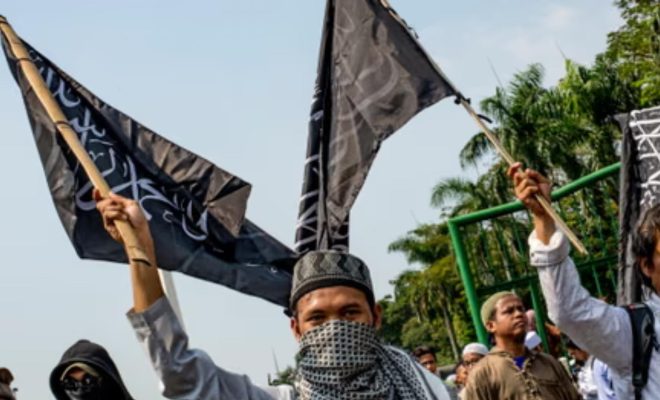
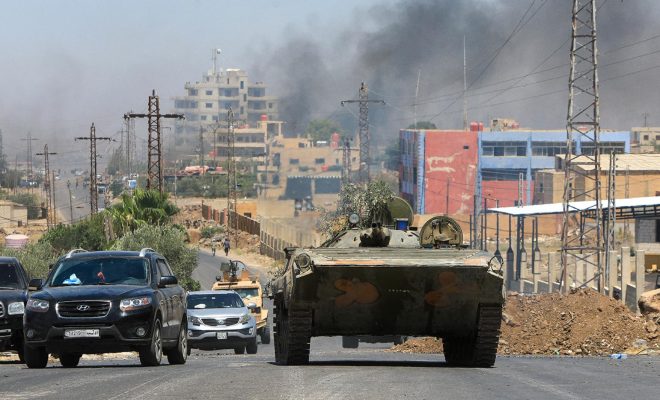
5- It appears that recent events on the West Coast—specifically the Houthi takeover on September 3 and 11 of this year of Hays, Al-Khokha, Al-Mukha (Mocca),and its port, Mayun Island, and the remaining Yemeni islands in the southern Red Sea extending to Bab al-Mandab—mirror the events of 2018, when the UAE and its local proxies were ousted from Al-Hudaydah, as well as the events of late 2025 and early 2026, when they were driven out of Hadramaut and Al-Mahra. I draw this parallel because, through the Houthi operation, the US sought to undermine British influence in Yemen by striking at Britain’s proxies on the West Coast. This includes the force dubbed the “National Resistance (Guards of the Republic)”—with a core of Yemeni Republican Guard troops—led by Tariq Saleh; a force sponsored and guarded by the UAE under the directive of its master, Britain, only to see its efforts culminate in the fall of Al-Mukha (Mocca) and the Khalid Camp on the Red Sea coast, thereby completing the Houthi group’s control over the entire coastline. The fall of Al-Mukha (Mocca) on September 10, 2026, dealt a severe blow to the leader of this resistance, Tariq Saleh—a British agent, and nephew of the late President Ali Saleh, himself a British agent—who is backed by the UAE. In another move to eliminate Britain’s agents—following the defeat of another of its agents, Aidarus al-Zoubaidi, who was forced to flee to the UAE—Saudi Arabia likely managed to infiltrate the Yemeni Republican Guard with its own operatives. These operatives withdrew from their positions along the West Coast under Saudi orders. This threw the pro-British faction within the Yemeni Republican Guard—led by Tariq Saleh—into disarray, forcing him to order a withdrawal from all positions in the city. This decision came after he faced what—according to leaked audio recordings—he described as “betrayal from within,” referring to the Saudi-aligned factions in the Yemeni Republican Guard, and “abandonment by brethren,” referring to Saudi Arabia itself, which failed to come to his aid or strike at Houthi movements. Consequently, the Houthis entered these areas unopposed—much like their earlier, unopposed entry into Sana’a.
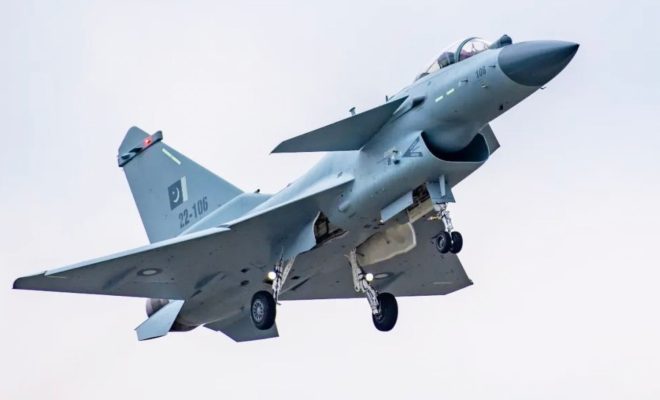
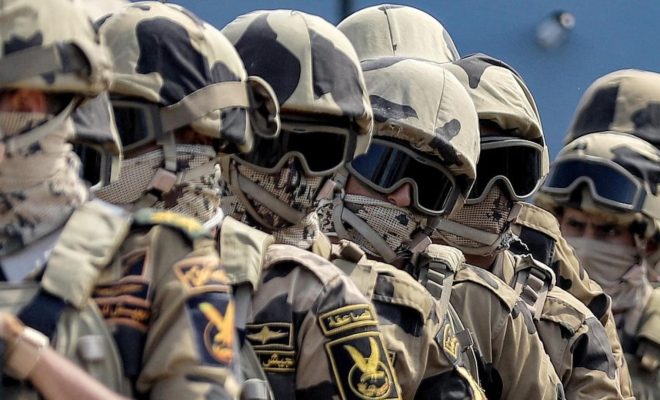
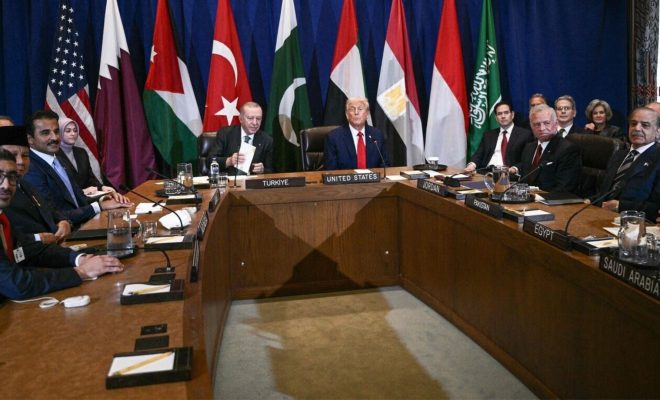
6- Further evidence of this is Saudi Arabia’s failure to activate the tripartite alliance—specifically by failing to call upon its partners in that alliance, Pakistan and Türkiye, to intervene. This confirms Saudi complicity and a lack of genuine intent to take serious action against the Houthis. After all, the United States—the driving force behind the alliance’s creation—did not request its activation or an intervention against the Houthis, even as they targeted Saudi territory. Türkiye and Pakistan limited themselves to condemnations and hollow statements expressing a readiness to assist. Moreover, Muhammad Bin Salman (MBS) did not approach them or issue any appeal for help; instead, he waited until the entirety—or the vast majority—of Yemen’s West Coast had fallen into Houthi hands before finally convening the “Makkah Alliance” to discuss assisting Saudi Arabia in the face of Houthi attacks. “On Friday, the Chiefs of Staff of the armed forces of Saudi Arabia, Türkiye, and Pakistan met in the Saudi capital, Riyadh, within the framework of the Makkah Joint Defense Agreement to discuss security developments and threats facing the Kingdom. The Saudi Ministry of Defense stated that the meeting addressed enhancing intelligence and military cooperation and integrating capabilities to bolster deterrence and collective defense. According to the Ministry, the Chiefs of Staff reviewed the security situation and condemned the attacks targeting Makkah and civilian infrastructure in the Kingdom. The parties to the agreement strongly reaffirmed their commitment to collective defense, reflecting the three nations’ resolve to defend the security, sovereignty, and territorial integrity of the Kingdom of Saudi Arabia…” [Al Jazeera, September 26, 2026]—meaning this meeting took place after the Houthis had consolidated their control over Yemen’s west coast!
7- Furthermore, America did not intervene or strike the Houthis—despite repeatedly declaring that it strikes Iran’s proxies—nor did it ask Saudi Arabia to strike them or activate the trilateral alliance. This stands in contrast to the harsh measures America took against Iran’s proxies in Syria, Iraq, and Lebanon. Although the Houthis are a powerful Iranian proxy in Yemen, neither America nor Saudi Arabia took decisive action—as they did with other Iranian proxies—to prevent the Houthis from seizing control of Yemen’s west coast! Their collusion in this matter is obvious to anyone with eyes to see. On September 13, 2026, Reuters cited three sources stating that U.S. President Trump held a phone call with Saudi Crown Prince Muhammad Bin Salman (MBS), saying “I have made a call with MBS. He’s a good friend of mine, and it’s going to — I can just say everything’s going to work out fine and dandy. It’s going to be very good.” This implies that Trump is behind this collusion, as “everything’s going to work out fine and dandy” means matters will unfold exactly as America desires, with the outcome serving its interests. This is further corroborated by U.S. Secretary of State Marco Rubio’s visit to Saudi Arabia and his meeting with its ruler, Muhammad Bin Salman, amidst the Houthi advance along the West Coast, as well as his statement on September 8, 2026, “We have a very strong defense agreement with Saudi Arabia, and we will live up to our commitments in that agreement.” Thus, the U.S. official declares that America is monitoring events closely—meaning it is fully aware of everything taking place.
8- Further confirming this is the fact that America rejected the Yemeni government’s request for military intervention. On September 21, 2026, Reuters reported—citing both Yemeni and Western sources—that Rashad al-Alimi, head of the Yemeni Presidential Leadership Council, had requested US military assistance from Trump during a phone call the previous day; the sources noted, however, that Trump made no direct pledge of military support during the conversation. Trump himself has stated, “The Houthis called us, and they let us know that they don’t want to fight with us. They don’t want me to go after them” (Al-Araby Al-Jadeed, September 13, 2026). Additionally, on September 16, 2026, Reuters cited five sources reporting that “US officials held a secret meeting with representatives of the Yemeni Houthi group at the US Embassy in Muscat over the weekend. Senior Houthi officials participated in the talks, including the group’s spokesman, Mohammed Abdulsalam—who is subject to US sanctions—and Abdulmalik al-Ajri.” These sources stated that, during the meeting, the Houthi representatives pledged to abide by the ceasefire agreement reached with Washington in 2025 and to refrain from targeting US or Occupation Entity ships but they reserved the right to attack hostile ships. On September 20, 2016, Mohammed al-Bukhaiti, a member of the Houthi group’s political bureau, acknowledged in a Zoom interview with the Associated Press from Sana’a that indirect contacts had taken place between his group and the US via the Sultanate of Oman. He stated that the group had informed the Trump administration of its intention not to target the US or its ships in the Red Sea and the Bab al-Mandab Strait, and that its current operations were directed against Saudi Arabia. He also noted that Washington had communicated with the group while its forces were advancing along Yemen’s west coast and reaching areas overlooking the Bab al-Mandab Strait. All of this indicates that the events were orchestrated by the US and that the Houthi group proceeded with this plan knowingly!
9- A careful examination of the Houthi attacks on Yemen’s west coast—where the Houthis have nearly seized control of the entire coastline—reveals that neither the US nor Saudi Arabia has moved to aid the Yemeni government in Aden, even though Saudi Arabia itself has been targeted by Houthi attacks. When combined with the meetings between Houthi representatives and US officials in Muscat (Oman) and the aforementioned statements regarding US non-intervention against Houthi attacks on the west coast—despite requests from the Aden government—it becomes evident that the Houthi occupation of most of Yemen’s west coast occurred with American and Saudi approval. This appears to align with the following three objectives:
First: Integrating the Houthis into Yemen’s governance and assigning them a primary role in rule, thereby gradually sidelining British proxies in Yemen—especially given that British loyalists in Yemen have not been entirely eliminated; indeed, among them are those within and around the Presidential Council.
Secondly: This matter serves as a lure for the Iranian leadership and paves the way for a softening of their stance toward the US—as evidenced by the US-Iran meetings in New York and the plan presented by the Iranian president and foreign ministry. They had expected Trump’s approval, hoping Iran would return to the US orbit; however, Trump, in his arrogance, rejected it, insisting that Iran remain merely a subordinate proxy.
Thirdly: It is a matter of a “warrior’s respite.” The US faces midterm elections in about a month, and the electoral process necessitates calming the situation—particularly regarding military conflict—until the elections conclude.
It appears that these three objectives—whether individually or combined—lie behind the lack of an effective response from the US and Saudi Arabia to the Houthis’ seizure of Yemen’s West Coast; consequently, the Houthis were able to take control of the West Coast with ease!
10- Thus, we see the Anglo-American conflict raging in Yemen, albeit through regional and local agents. The people of Yemen serve as fuel for this conflict, suffering immensely from it for decades. These agents care little for the people, prioritizing their own personal interests instead. Therefore, there is no salvation for Yemen without ridding itself of these proxies, which enable the competing colonial powers to remain and extend their influence. This can only be achieved through the establishment of the Khilafah Rashidah (Rightly-Guided Caliphate) on the Method of the Prophethood—promised by Allah ﷻ Who said, ﴿وَعَدَ اللَّهُ الَّذِينَ آمَنُوا مِنْكُمْ وَعَمِلُوا الصَّالِحَاتِ لَيَسْتَخْلِفَنَّهُمْ فِي الْأَرْضِ﴾ “Allah has promised those among you who believe and do righteous deeds that He will surely grant them succession to authority upon the earth” [TMQ Surah An-Nur: 55]—and foretold by the Messenger of Allah ﷺ who said, «ثُمَّ تَكُونُ خِلَافَةٌ عَلَى مِنْهَاجِ النُّبُوَّةِ “Then there will be a Khilafah (Caliphate) on the method of the Prophethood” (narrated by Ahmad, Al-Tayalisi, and Al-Bazzar). Therefore, we call upon the people of Yemen—whom the Messenger of Allah ﷺ praised by saying, «الْإِيمَانُ يَمَانٍ هَا هُنَا» “Iman is in Yemen, right here” (narrated by Al-Bukhari) and «الْفِقْهُ يَمَانٍ وَالْحِكْمَةُ يَمَانِيَةٌ» “Fiqh of the Deen is in Yemen, and wisdom is in Yemen” (narrated by Al-Bukhari and Muslim)—we call upon them to support us in Hizb ut Tahrir so that we may all work together to realize the promise of Allah ﷻ and the glad tidings of His Messenger ﷺ, thereby attaining success in both this world and the Hereafter; and that is the supreme triumph.
15th of Rabi’ al-Thani, 1448 AH
27 September 2026 CE