Reflections: The Importance of the New Hijri Year

The month of Muharram is the first month of the Islamic Calendar. As we enter this blessed month, we should remind ourselves about the Hijrah and the actions that RasulAllah (saw) took to make the Hijrah possible. More specifically, RasulAllah (saw) sought unconditional support (Nusrah) from powerful tribes, so that they would believe in Islam and support him in its implementation. This support came from the Ansar (ra) of Madinah who saw the immense opportunity in the service of Allah’s cause.
During the Khilafah of Umar bin al-Khattab (ra) the Sahabah (ra) agreed to start the Islamic calendar in the year that the Messenger of Allah (saw) made Hijrah (i.e. migration from Makkah) to Madinah and established the first Islamic State. As we enter the blessed month of Muharram in the year 1448, we should remind ourselves of the Hijrah and its significance.
Hijrah: Its Relationship to Seeking Nusrah
When we look at the Seerah of the Prophet (saw) – and the Hijrah in particular – we should focus on what actions he undertook to achieve such a feat. As we know, RasulAllah (saw) did not do anything related to the Deen out of his own desires. As Allah (swt) revealed:
“Nor does he speak out of desire. It is naught but revelation that is revealed.” [TMQ 53:3-4]
Consequently, the Prophet (saw) was guided by the Wahy (revelation) from Allah (swt) to undertake those actions necessary to make the Hijrah from the sovereignty of disbelief (dar-al kufr) to the sovereignty of Islam (dar-al Islam).
The Seerah of RasulAllah (saw) is an integral part of the Sunnah and is just as much a part of the revelation as is the Qur’an. More importantly, we are obligated to follow the Prophet (saw) – even in his method of Da’wah. As Allah (swt) revealed in the following ayat:
“Say (O Muhammad): If you love Allah then follow me, Allah will love you and forgive you your sins. And Allah is Oft-Forgiving, Most Merciful.” [TMQ 3:31]
“And whatever the Messenger gives you, accept it, and whatever he forbids you avoid it.” [TMQ 59:7]
Consequently, when examining the amazing journey of RasulAllah (saw), it is important to recognize that the Hijrah did not happen by accident. Rather, the Prophet (saw) undertook the action of seeking ‘Nusrah’ (i.e. seeking the support of the people of power in society who would believe in Islam and transfer authority to the Prophet [saw]).
The Hijrah marks the transition from the phase in the Da’wah known as “Seeking the Nusrah” to the phase where Islam is implemented by a state. The Hijrah of RasulAllah (saw) was a direct result of seeking and subsequently receiving the Nusrah. It is narrated on the authority of Ibn Abbas (ra) in Ibn Hajar’s Fath ul Bari, Tuhaft ul Ahwadhi & al Kalam as well as Hakim, Abu Nua’im and Baihaqi in Dala’il with sound narrations, that Ibn Abbas quotes Ali ibn Abi Talib (ra) who says:
“When Allah (swt) ordered the Prophet to approach the Arab tribes, I and Abu Bakr accompanied the Prophet (saw) to Mina until the court of the Arab tribes.”
Although the Muslims did enjoy safety in Madinah, it was not the main objective of the Hijrah. The Hijrah to Madinah was not made only to relieve the Muslims of persecution in Makkah. We see this clearly in fact that RasulAllah (saw) was seeking much more than safety for himself and the Sahabah (ra) when he refused the conditional offer of support from the tribe of Bani Shaiban, who offered to protect the Prophet (saw) from the Arabs but not the Persians. He replied to their offer by saying:
“Your reply is in no way bad, for you have spoken eloquently and truthfully. (But) God’s religion can only be engaged in by those who encompass all sides.” [Abu Nu’aym, Al-Hakim and Al-Bayhaqi]
The Prophet (saw) continued to seek Nusrah despite the refusal of several tribes; he did not waver, nor despair or change his course. ‘Zaad al Ma’ad’ reports from al-Waqidi who said:
“The tribes known to us whom the Prophet (saw) approached and called them are Banu ‘Aamer ibn Sa’sa’, Muharib ibn Hafsah, Fazarah, Ghassan, Murrah, Haneefah, Sulaym, ‘Abs, Banu Nadhar, Banu Bika’, Kindah, Kalb, Harith ibn Ka’ab, ‘Udrah and the Hadhramis. None of them responded positively.”
The Prophet (saw) persisted in seeking Nusrah until Allah (swt) blessed His servants with Nusrah from the Ansar. His persistence on seeking the Nusrah demonstrates that this action (of seeking Nusrah) is fard (obligatory) when seeking authority for Islam.
Allah (swt) Grants His Messenger (saw) the Support
When Mus’ab ibn Umair (ra) was sent to Madinah to spread the Message of Islam, it took him one year of tireless work in that city before its leaders journeyed to Makkah to transfer their authority over to the Prophet (saw) by giving him the Ba’yah. This Ba’yah was called Bayat-ul Harb (Allegiance of War). Although there was no war, it was called Bayat-ul Harb because it indicated the willingness of the Muslims to fight, when necessary, to protect the Da’wah and the newly established Islamic State. The Prophet (saw) had invested four years of Da’wah towards most of the tribes in Hijaz (the large area between Makkah and Madinah) before he received the Nusrah. The Quraysh understood the political importance of Nusrah. They understood that once RasulAllah (saw) was able to achieve the leadership in Madinah, he would challenge their dominance over the Arabs. Consequently, they became desperate and resorted to means that went completely against the laws of their tribal society: killing their own. As Allah (swt) has revealed:
“And when those who disbelieved devised plans against you that they might confine you or slay you or drive you away.” [TMQ 8:30]
It is critical for us, as Muslims, to realize that this event not only marks the beginning of our calendar, but more importantly, it commemorates the establishment of the nucleus of the Islamic State. For hundreds of years to come, this state would spread Islam to the neighbouring lands, liberating one oppressed people after another and bringing them the justice of the Islamic systems.
Al-Ansar: Those Who Gave Nusrah to RasulAllah
When recalling this journey of RasulAllah (saw), it is also important to remember the Ansar (ra). It was these Sahabah (ra) who saw the immense opportunity in supporting the Deen of Allah (swt) and His Messenger Muhammad (saw). In the Glorious Quran, Allah (swt) has described the Ansar with qualities that every true believer aspires to attain. Allah (swt) was pleased with them, and they were pleased with Him. Allah (swt) has revealed:
“And the foremost to embrace Islam of the Muhajirun (those who migrated from Makkah to Al-Madinah) and the Ansar (the people of Madinah who gave Nusrah to Islam) and also those who followed them exactly (in Faith). Allah is well-pleased with them as they are well-pleased with Him. He has prepared for them Gardens under which rivers flow (Paradise), to dwell therein forever. That is the supreme success.” [TMQ 9:100]
In the saheeh hadith, it is narrated that we are obligated to love the Ansar:
“Love for the Ansar is a sign of faith and hatred for the Ansar is a sign of hypocrisy.” [Bukhari & Muslim]
“None but the believer loves them, none but the hypocrite hates them. He who loved them loved Allah and he who hated them hated Allah.” [Tirmidhi]
Where are the Ansar of Today?
It has been almost 3 years since the start of the intensive attacks on Gaza and the surrounding areas, where we still see the streets of Gaza flowing with the blood of this noble Ummah. Today, the oppression and the slaughter continues even though the cameras have been turned off. We are once again in need of leadership of the likes of the Ansar who were willing to follow the Prophet (saw) even if he led them into the ocean.
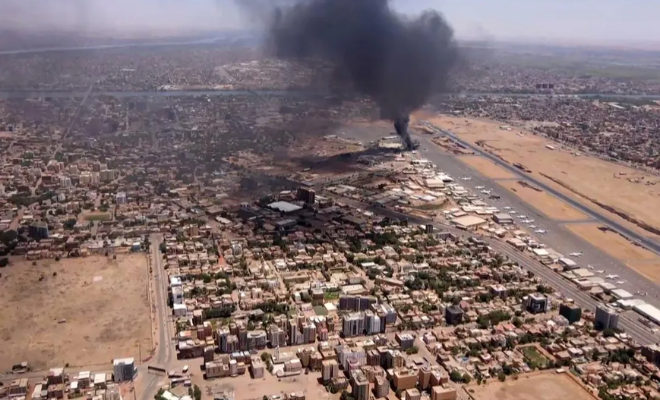
The condition of the Muslims today is similar to the condition of the Muslims before the Hijrah – the Muslims have no security, and the enemies of Islam have the upper hand. Just as Sumayiah (ra) and other Muslims were brutally killed in Makkah, we are being slaughtered in Palestine, Pakistan, Afghanistan, Iran, Sudan, and many other places. However, once RasulAllah (saw) secured the Nusrah from the Ansar, he was able to provide sanctuary for the believers. Similarly, once the Ansar (i.e. the people of power and influence) of today rise up and see Islam as more important than their wealth, family, and lives, then they, by the Will of Allah (swt), will provide protection to the Muslims from the war machines of the colonial powers.
The Muslims must work to convince these influential people in the Muslim lands to give Nusrah to Islam. We must convince the people of power and influence that attaining Jannah is more important than their military ranks and medals. We must make them aware that such things have no weight on the Day of Judgment – unless they were used for Allah’s (swt) cause.
May Allah (swt) help us to work as the Sahabah (ra) did and invite the people of power and influence to the unconditional support of Islam. May Allah (swt) guide the influential people amongst the Muslims. May Allah (swt) change our state of fear to one of security. Ameen.