Hizb ut Tahrir Canada

Top Menu

Main Menu

  • Canada
  • Muslim Lands
  • Islamic Culture
  • Editorial
  • Multimedia
    • Resources
  • About Us
    • Contact Us

logo

Hizb ut Tahrir Canada

  • Canada
  • Muslim Lands
  • Islamic Culture
  • Editorial
  • Multimedia
    • Resources
  • About Us
    • Contact Us
Editorial
Home›Muslim Lands›Editorial›The Truce and Negotiations Between America and Iran

The Truce and Negotiations Between America and Iran

By admin
April 14, 2026
6
0
Share:

By: Ustadh Asaad Mansour

When we follow America’s aggression against Iran and the statements of its officials, especially Trump, regarding halting the aggression, threatening to resume it, or declaring a truce, all of this must be understood within the framework of recognizing its objective behind the aggression. All actions are carried out to achieve this objective. For Iran, this objective is to transform it from a state orbiting within America’s sphere of influence, striving for independence, into a subservient state upon which America dictates terms and implements its wishes. As for the entire region, it is to consolidate its control over it due to its strategic location, plunder its resources as a colonialist objective, prevent its resurgence and liberation (tahrir), and thwart the establishment of its Khilafah (Caliphate) because it possesses a universal ideology that challenges capitalism. It is also to consolidate the Occupying Entity in the Levant to be used as a dirty tool to achieve these objectives.

When America failed to achieve its objective against Iran during the 40 days of war, it requested a two-week ceasefire under the guise of a Pakistani plan, in exchange for Iran opening the Strait of Hormuz. Thus, it reduced its objective to opening this strait, which was already open before its aggression against Iran! The US resorted to a ceasefire after Iran rejected its 15-point plan, also presented through Pakistan, on March 24, 2016. Iran refused to negotiate under fire. The plan included the complete dismantling of its nuclear program, the closure of the Natanz, Fordow, and Isfahan nuclear reactors, the handover of its 60% enriched uranium stockpile to the International Atomic Energy Agency (IAEA), the import of uranium for peaceful purposes from abroad, a ban on uranium enrichment on Iranian soil, a rigorous IAEA inspection program of its nuclear program and its sources of supply, a halt to its ballistic missile and drone programs, an end to support for regional proxies such as Hezbollah in Lebanon, the maintenance of the Strait of Hormuz as a free shipping lane, and recognition of the right of the Occupying Entity in the Levant. All of these conditions, and the negotiations under fire, were considered humiliating for Iran.

This led to the truce and a softening of the demands. However, these demands will remain the focus of negotiations, representing the highest level of demands. America will then assess the feasibility of achieving all or most of them. If it succeeds in imposing these demands, Iran will lose the elements of power that keep it a regional power, and lost its chance for independence, thus becoming a subordinate state.

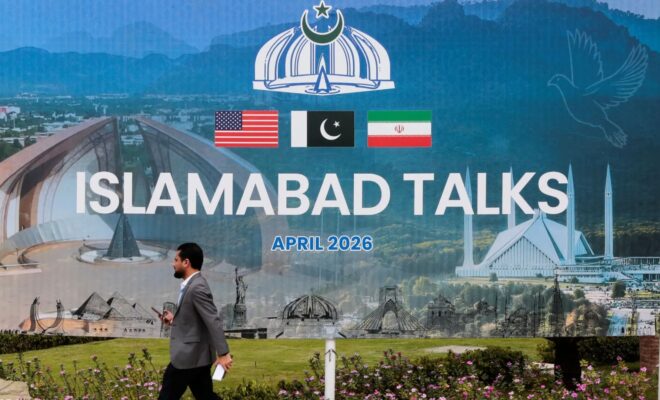
When the ceasefire was declared, negotiations began on April 11, 2026, in Pakistan between the two sides. This is an achievement for Iran, as it refused to negotiate under fire. The goal of the ceasefire is to conduct negotiations, not to permanently end the aggression.

When America sends a high-level delegation to the negotiations, headed by the US Vice President, this indicates the seriousness of the matter and its determination to resume aggression if its conditions, or the most important ones, are not met. The US Vice President then issues direct threats to the Iranian delegation during the negotiations, acting as the second-highest-ranking decision-maker in America and representing the President, as if the President himself were negotiating. The consensus within the American administration is to continue the aggression if the negotiations fail, because the US Vice President has consistently favored negotiations over war. This indicates that any failure of the negotiations will lead America to resume its aggression. Its president, Trump, threatened on April 10, 2026, saying, “We have a reset going. We’re loading up the ships with the best ammunition, the best weapons ever made… And if we don’t have a deal, we will be using them, and we will be using them very effectively.”

A truce differs from ending a state of war and signing a permanent peace agreement. A truce can collapse at any moment, either due to a violation by one or both sides.

Iran’s conditions, as listed, number ten: an American guarantee of nonaggression with Iran, continued Iranian control of the Strait of Hormuz, acceptance of uranium enrichment, lifting of primary sanctions, lifting of secondary sanctions, termination of UN Security Council resolutions against it, termination of all resolutions against Iran by the Board of Governors of the International Atomic Energy Agency, reparations to Iran for war damages, withdrawal of U.S. combat forces from all bases and positions in the region, and a cessation of hostilities on all fronts, including Lebanon.

However, Iran did not explicitly state that it rejects America’s conditions. Instead, it presented its own conditions, without addressing the American ones, as if placing them alongside the American ones, suggesting its willingness to accept some or all of them, or to accept them in a modified form, if its own conditions are met.

Two rounds of direct negotiations were held between the two sides, with Pakistan as the host. Iranian media announced progress in the talks, and that the US had agreed to release frozen Iranian funds and to halt attacks by the Occupying Entity in Beirut’s southern suburbs. This implies that the area south of the Litani River was excluded from the ceasefire, as the Occupying Entity seeks to establish a buffer zone there. This zone will be negotiated when the Lebanese delegation meets with the delegation of the Jewish entity on 14 April 2026, in Washington, under US auspices.

Following this, the third round of negotiations took place on the morning of 12 April 2026. US Vice President Vance announced that the negotiations ended without a peace agreement because the Iranians rejected the US conditions regarding not developing nuclear weapons. He said, “The simple fact is that we need to see an affirmative commitment that they will not seek a nuclear weapon, and they will not seek the tools that would enable them to quickly achieve a nuclear weapon” and described the failure as “bad news for Iran much more than it’s bad news for the United States of America.”

Meanwhile, on 12 April 2026 the Iranian Foreign Ministry spokesperson Esmaeil Baqaei posted on X that. “The success of this diplomatic process depends on the seriousness and good faith of the opposing side, refraining from excessive demands and unlawful requests, and the acceptance of Iran’s legitimate rights and interests.”

This implies that the US was negotiating its 15 demands, which Iran considers excessive, and that a resumption of US aggression is possible at any moment. It appears that the US is determined to achieve its goal of making Iran a subordinate state. The extent of America’s success or failure depends on the steadfastness of the Iranians in their positions and their readiness to fight.

Looking at the overall picture, one sees that there is acceptance of America’s presence in the region, leading to negotiations with it, and there is also acceptance of the existence of the Entity occupying Palestine, leading to negotiations with it.

However, fundamental principle is not to negotiate with America, but to continue fighting it to expel it from the region and force it back across the Atlantic, and to continue fighting the Occupying Entity until the removal of its presence in the region. This requires establishing a state based on an ideology that fights to raise the Kalimah of Allah ﷻ as the highest, namely, the Khilafah Rashidah (Rightly Guided Caliphate) on the Method of the Prophethood.

Previous Article

Celebrating Eid: The Ummah’s Unbroken Smile

0
Shares
  • 0
  • +

Related articles More from author

  • Editorial

    The Khilafah (Caliphate) and Mahdi

    August 28, 2025
    By admin
  • Editorial

    Political and Ideological Realities Confirmed by the Bloodshed in Suwayda

    July 25, 2025
    By admin
  • Editorial

    O Pakistan Army! Liberate Occupied Kashmir. Allah ﷻ, the Glad Tidings of the Prophet ﷺ, and the Believers Are With ...

    May 11, 2025
    By admin
  • Editorial

    The Future of Modern Warfare and the Lost Role of the Khilafah (Caliphate)

    July 29, 2025
    By admin
  • Editorial

    A Huge Difference Between the Istanbul Declaration and the Previous Fatwas!

    September 13, 2025
    By admin
  • Editorial

    The Security Agreement with the Zionists is a Dangerous Slide Toward the Bottom of the Abyss!

    September 25, 2025
    By admin

  • FeaturedPolitical Concepts

    Four More Years

  • FeaturedMuslim Lands

    Imran Khan’s Last ‘Over’ – It is a Rigged Game

  • Editorial

    The Khilafah (Caliphate) and Mahdi

Hizb ut Tahrir Canada